
Leaving the Vehicle Behind
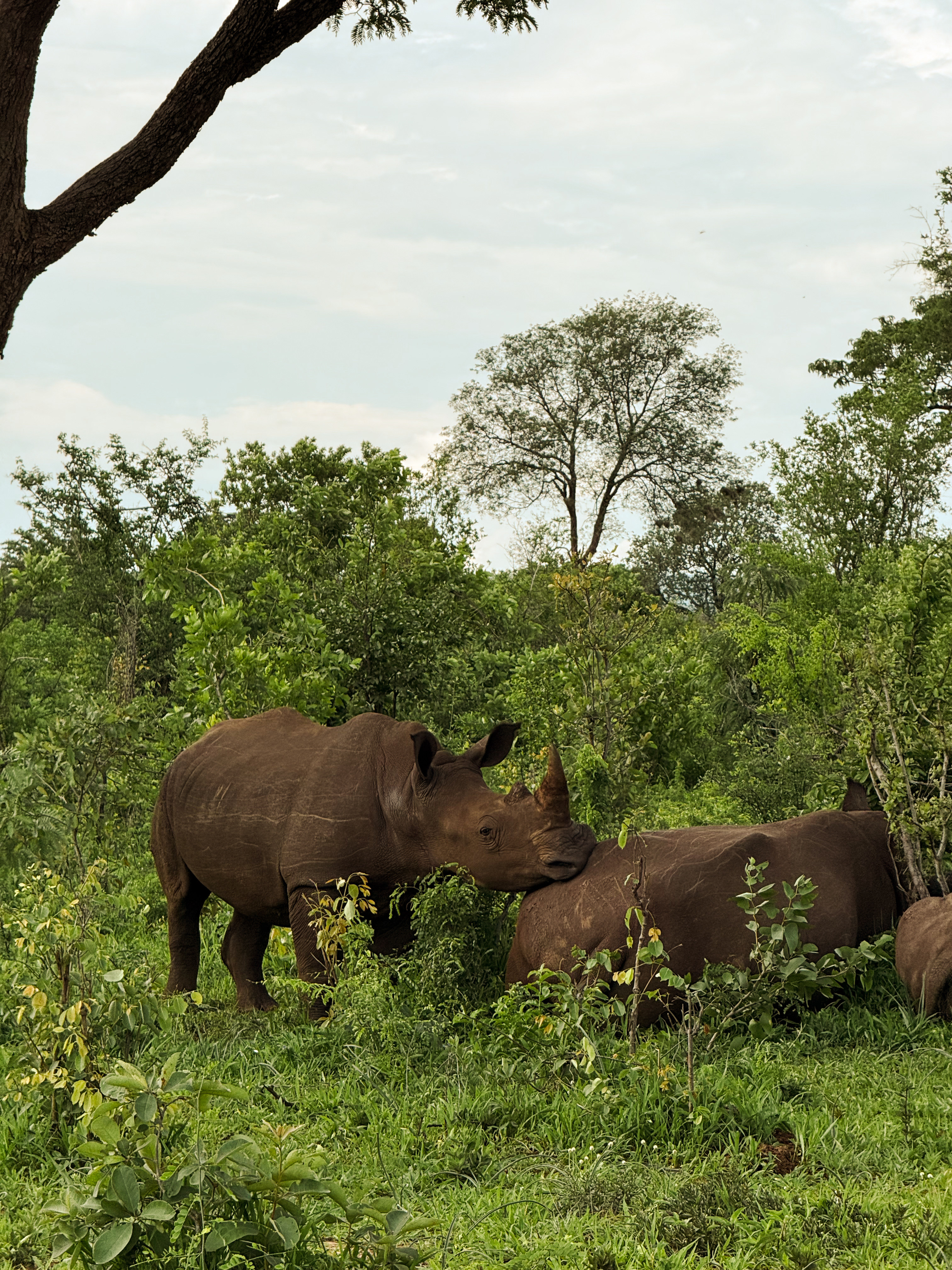
There are some wildlife encounters that feel completely different when there is nothing between you and the animal. Walking with white rhinos in Mosi-oa-Tunya National Park was one of them.
Just outside Livingstone and stretching along the Zambezi River above Victoria Falls, Mosi-oa-Tunya is one of Zambia’s smaller national parks. It is home to giraffe, buffalo, zebra, elephants and a closely protected population of white rhinos.

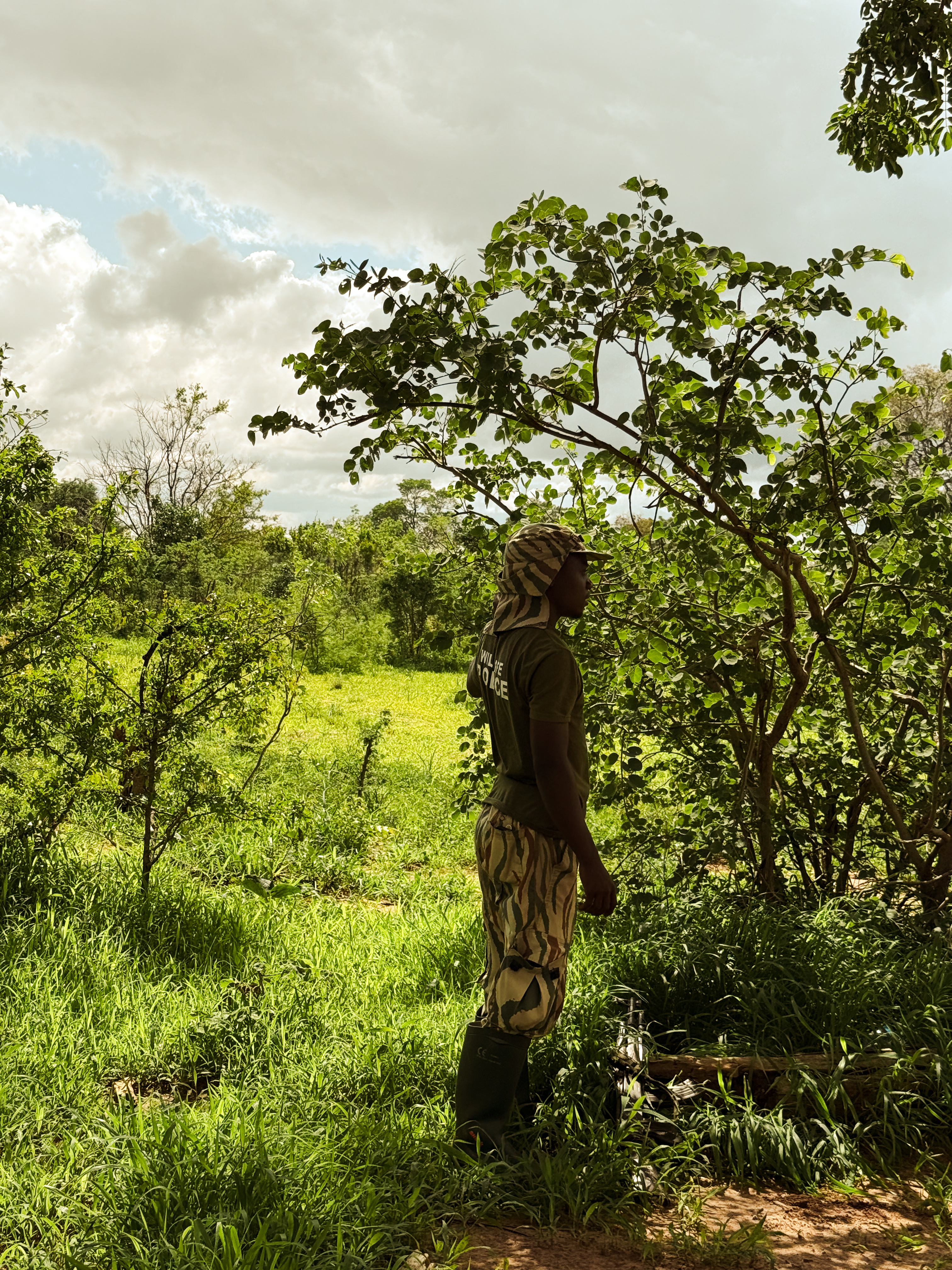
Once the rangers had located the rhinos, we left the safari vehicle and continued on foot, following the rangers in single file, walking quietly and listening closely to their instructions. Everything was deliberately calm and controlled, no sudden movements, no loud noises, plenty of distance kept between us and the animals.
We stopped at a safe distance and simply watched. The rhinos grazed while the rangers kept a careful eye on both them and us. It was not about getting as close as possible, but being allowed into their environment for a moment.
The rhinos we encountered still had their horns, something our ranger explained was possible because of the level of protection surrounding them. Rhino horn remains one of the principal reasons these animals are targeted by poachers, which made the presence of those rangers feel like an essential part of their survival, not just a formality.
Why Walking Safaris Feel Different
Walking safaris change your relationship with the landscape. You notice tracks, sounds, vegetation and the subtle signs that reveal what might be nearby.
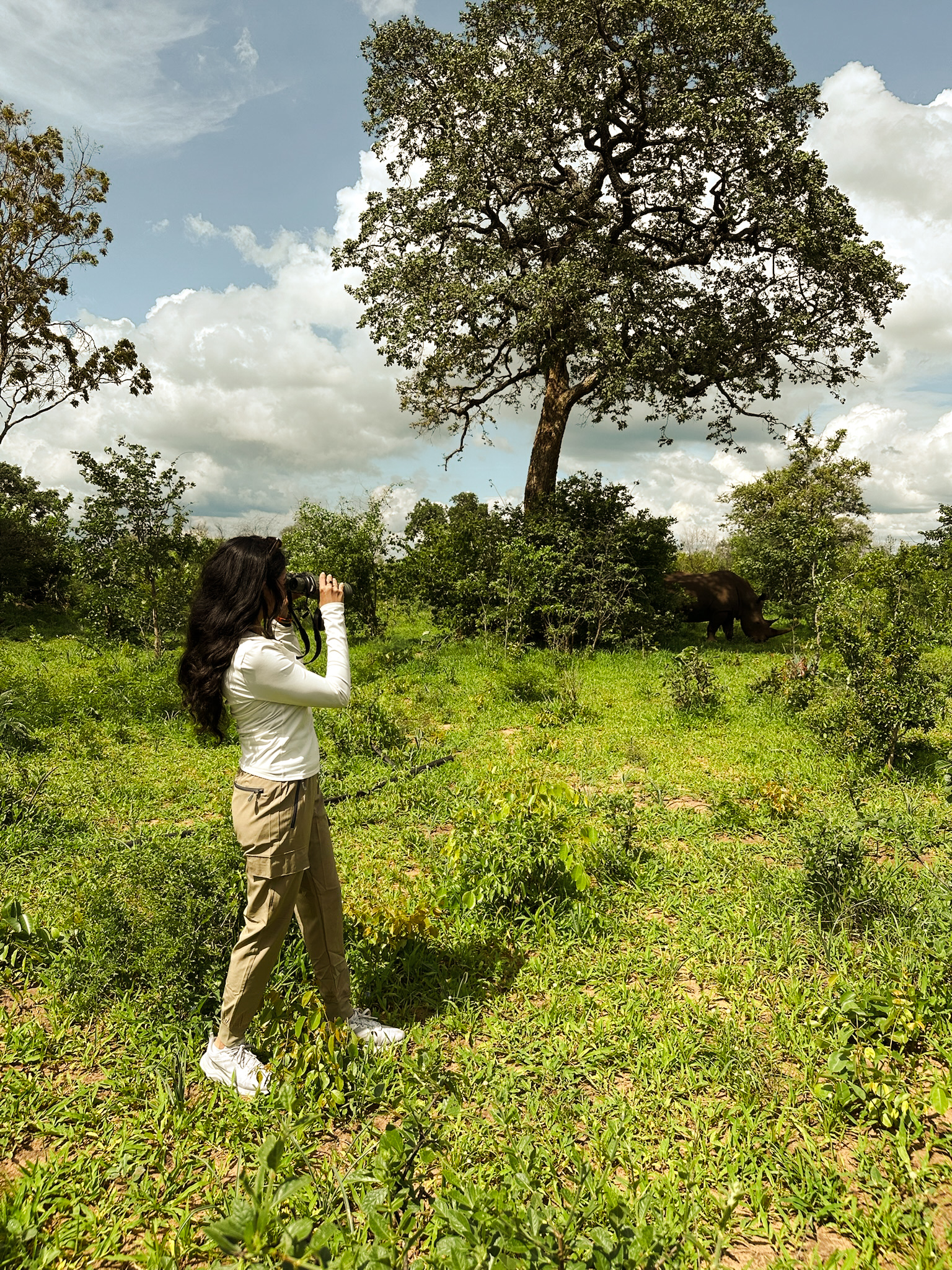
On foot, you become much more aware of where you are and how you move. Seeing a rhino from a safari vehicle is incredible. Standing in the African bush and watching one on foot is something else entirely.
A Remarkable Conservation Story
The animals at Mosi-oa-Tunya are Southern white rhinos. The subspecies once came extraordinarily close to disappearing, its population falling to roughly 50 to 100 animals in the early twentieth century, before decades of conservation helped it recover. Today, more than 15,000 white rhinos remain in Africa.
The Northern white rhino has had a far bleaker fate. Only two remain in the world, both female, living under protection at Ol Pejeta Conservancy in Kenya. With no surviving males, the subspecies is considered functionally extinct.
It gives an experience like this a different weight. Mosi-oa-Tunya’s white rhinos are closely protected by wildlife scouts, a reminder that seeing these animals in the wild, horns intact, isn’t something to take for granted.
What to Expect
Here’s what to know before booking this experience for yourself.
The experience combines a game drive through Mosi-oa-Tunya National Park with a guided rhino walk. You’ll be collected from your hotel in Livingstone and travel by safari vehicle into the park, before meeting the rangers for the walking portion.
Come prepared with comfortable closed shoes, lightweight clothing, sun protection and a camera. And when the moment comes, take the photograph, then put the camera down for a moment. Seeing a white rhino grazing in front of you, on foot, in the Zambian bush, is worth actually being present for.
The Details
- Location
- Mosi-oa-Tunya National Park, Livingstone
- Experience
- Game drive and guided rhino walk
- Duration
- Approximately 3-4 hours
- Best for
- Wildlife and conservation-minded travellers
Book This Experience
This experience can be booked directly on GetYourGuide.

This is an affiliate link. If you book through it, Zuvani may receive a commission at no additional cost to you.